Japan vs South Korea: Which One to Pick and Which One First
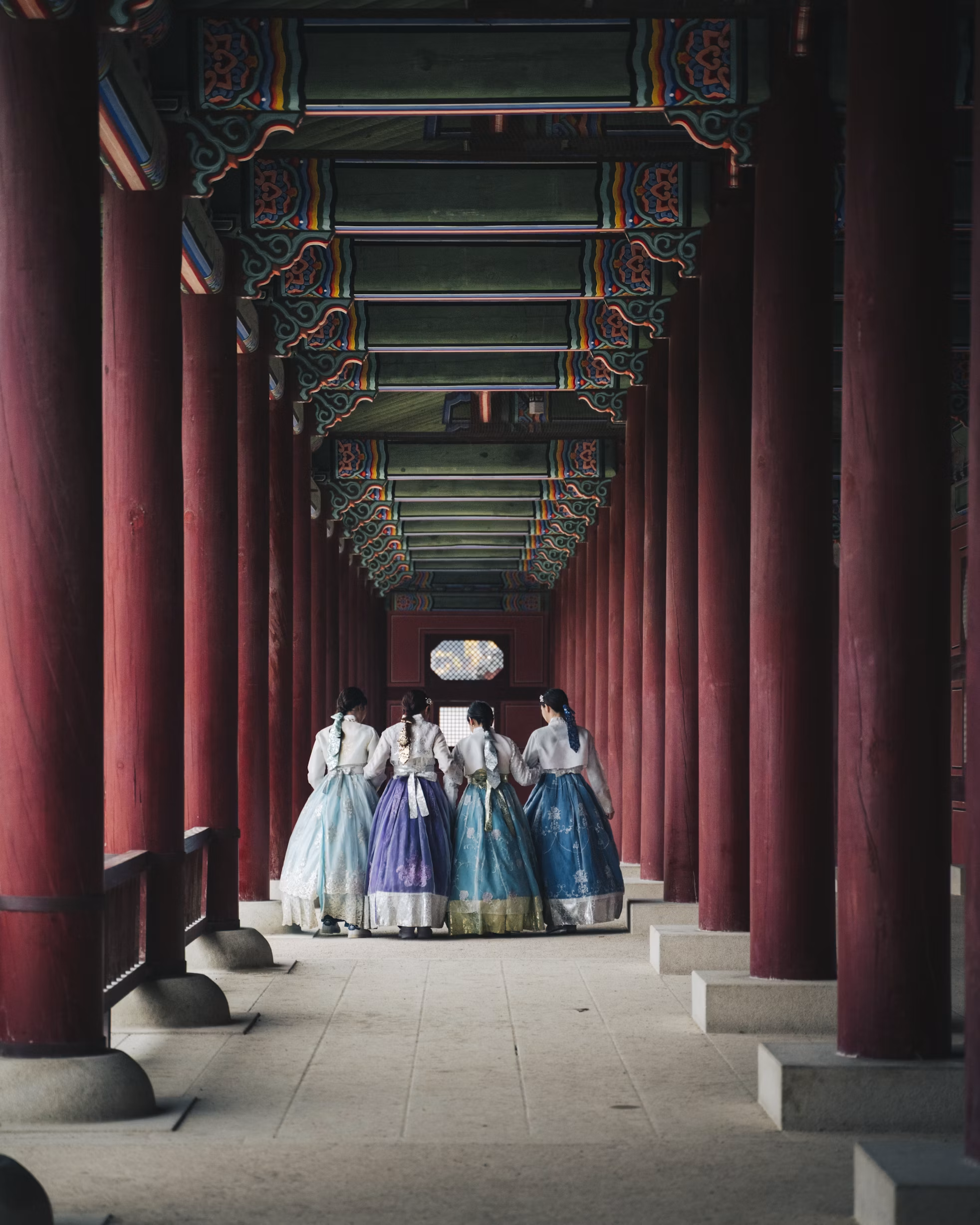
They get lumped together, and they really shouldn't be. Japan and South Korea feel about as alike as Italy and Germany: same continent, cheap flights between them, and that's roughly where it ends. Picking between them isn't about which is "better". It's about which trip you actually want.
The feeling on the ground
Japan is precise. Trains that leave on the minute, immaculate detail, a calm orderliness that makes you slow down and pay attention. It also keeps hours: most restaurants and bars close between 10pm and 11pm, and after midnight your dinner options are vending machines (there's one every 30 meters, that part is not a joke).
Advertising
South Korea runs the other way. Seoul is faster, louder, more direct in the best sense: plenty of restaurants and bars stay open until 2am or 4am, and the 24-hour culture is real, not a tourism-board slogan. Japan whispers; Korea grabs your sleeve.
Japan is the trip you remember for how it felt. Korea is the trip you remember for what happened at 2 a.m.
Where your money goes further
On accommodation, Seoul wins: Numbeo's cost-of-living data puts Tokyo roughly 15-20% higher for a place to sleep. Casual food is surprisingly even: a good street-food or neighborhood-restaurant dinner lands around €10-12 in both countries. Transport tips the scale back toward Seoul: a T-money card gets you a flat subway fare of about 1,400 KRW (€0.95) per ride, while Tokyo charges by distance, ¥180-320 (€1.10-2.00).
Japan isn't expensive by reputation so much as by temptation: the shinkansen, the museum, the omakase, it all stacks up. In Korea you spend less without trying.
Historic sites
Japan
South Korea
Kyoto holds 17 UNESCO sites; Himeji Castle is the best-preserved feudal castle in Asia; Nara has 8th-century temples and deer wandering freely among visitors
Gyeongju is an open-air museum of Silla-era royal tombs and temples; the Joseon palaces in Seoul are well-restored but surrounded by a modern city
Nature and landscapes
Japan
South Korea
Mt. Fuji, bamboo groves at Arashiyama, volcanic onsen landscapes in Hakone and Beppu, untouched forests in Hokkaido
Jeju Island (a volcanic UNESCO island with lava tubes and beaches, the closest thing to a tropical break in the region), Seoraksan national park, dramatic east-coast cliffs
Festivals and events
Japan
South Korea
Gion Matsuri fills Kyoto the whole of July; Sapporo Snow Festival in February; hanami season turns parks into week-long picnics across the country
Jinhae cherry blossom festival in April (less chaotic than Kyoto); Boryeong Mud Festival in July; Chuseok in autumn shuts the country down for a week
Pop culture
Japan
South Korea
Anime, manga and video games (Nintendo, Sony, Square Enix). Akihabara and franchise cafes across the country; retro arcades still in full operation
K-pop and K-dramas: HYBE, SM, YG and JYP all based in Seoul. Idol merchandise, live-performance venues and K-drama filming locations
Best value window
Japan
South Korea
May and September: fewer crowds, fares noticeably lower than peak. Cherry blossom (late March-April) and koyo (Oct-Nov) are beautiful but crowded and expensive
April-May and September-October for mild weather and reasonable prices. January in Seoul averages -5°C, colder than Tokyo's 5°C in the same month
Tourist crowds
Japan
South Korea
Kyoto in cherry blossom season or Golden Week feels like a queue with temples in it. Much quieter in rural areas and in winter
Seoul is dense but rarely as saturated as peak Kyoto; most cultural sites are reachable without fighting the crowds
Accommodation
Japan
South Korea
Tokyo runs 15-20% above Seoul for a comparable central room
Cheaper baseline, especially outside Gangnam
Casual dinner
Japan
South Korea
€10-12 at a ramen-ya or izakaya counter
€10-12 at a pojangmacha or galbi joint
Metro ride
Japan
South Korea
€1.20-2.20 (distance-based, Tokyo)
~€1 flat (Seoul T-money card)
English signage
Japan
South Korea
Good in tourist areas; Roman script on all metro lines
Good in Seoul; patchier outside the capital
Pace
Japan
South Korea
Quiet and deliberate: service is precise, interactions brief
Fast and direct: strangers will talk to you, unsolicited
Prices indicative, 2024-2025. Accommodation: Numbeo city-centre comparisons. Climate: Japan Meteorological Agency + KMA averages.
Prices indicative, 2024-2025. Accommodation: Numbeo city-centre comparisons. Climate: Japan Meteorological Agency + KMA averages.
Advertising
Food: a draw I refuse to call
Don't make me. Japanese food is craft: restraint, seasonality, the sense that someone trained for a decade to make your bowl of noodles. Korean food is comfort and fire: shared, sizzling at the table, eaten loudly with more banchan than the table can hold. One rewards attention; the other rewards appetite. Both are right.
Pop culture: which side are you on
Japan built the global template for anime, manga and video games: Nintendo, Sony, Square Enix, Konami, Capcom. Akihabara in Tokyo is the obvious epicenter, but it bleeds everywhere: franchise cafes in ordinary neighborhoods, retro game shops in basements, capsule toy machines on every corner. If you grew up on Final Fantasy, Evangelion or Pokémon, Japan is partly a pilgrimage.
Korea is where K-pop and K-dramas are made. HYBE (BTS's label), SM, YG and JYP are all based in Seoul. Hongdae fills up with idol merchandise and street auditions. K-drama filming locations draw serious tourism. The Hallyu wave isn't marketing language: it's an industry you walk through, and Seoul is the factory floor.
Neither is shallow. They're just wired into completely different parts of your brain.
Timing matters more than you think
If you're going to Japan for the cherry blossoms, the real window in Tokyo and Kyoto runs from late March to mid-April (Fukuoka blooms earlier). And if you land in Kyoto in July, you walk straight into Gion Matsuri: it runs the entire month, with the big parades on July 17 and July 24. Gorgeous, yes. Also a packed city and prices to match.
So which one first?
If it's your first big trip to the region and you want ease, beauty and zero friction: Japan. If you've traveled a lot, want energy and value, and don't mind a little disorder: South Korea. And if you have the time, don't choose: Tokyo to Seoul is about a 2-hour flight, and carriers like Air Seoul, Jin Air and Jeju Air sell one-way tickets from €50-80. The contrast between the two is the best souvenir you'll bring home.
The only wrong move is treating them as interchangeable. Whichever you pick, the deciding factor for when is the same: the week you go changes the price and the crowds more than the country does.
Can't decide? Let the scores settle it.
Planisky scores Tokyo and Seoul side by side, week by week, on price, crowds and weather, so the choice is based on your trip, not a coin flip. Free month for the first 100.